
Ngorongoro Crater Safari Guide: Wildlife, Scenery, Best Time, Itineraries
Plan your Ngorongoro safari with this clear guide. Discover the dense Ngorongoro wildlife, dramatic scenery, best time to visit, and simple itineraries for the Ngorongoro Crater.
High Big Five density · UNESCO World Heritage Site · Year-round Ngorongoro wildlife
Ngorongoro Safari Overview
A Ngorongoro safari offers one of the highest wildlife densities in Africa. The Ngorongoro Crater is a collapsed volcano that holds lions, elephants, buffalo, and often rhinos in a relatively small space. As a result, many visitors see multiple Big Five members in a single day.
The site is a UNESCO World Heritage area. It combines dramatic scenery with rich Ngorongoro wildlife. Therefore it sits at the heart of most Northern Circuit trips.
Africa Paradise Adventures includes the crater in many Tanzania itineraries. You can explore wider options on our Tanzania safari page and see how the crater fits with nearby parks on the Ngorongoro, Tarangire and Manyara package.
Ngorongoro Wildlife You Can Expect
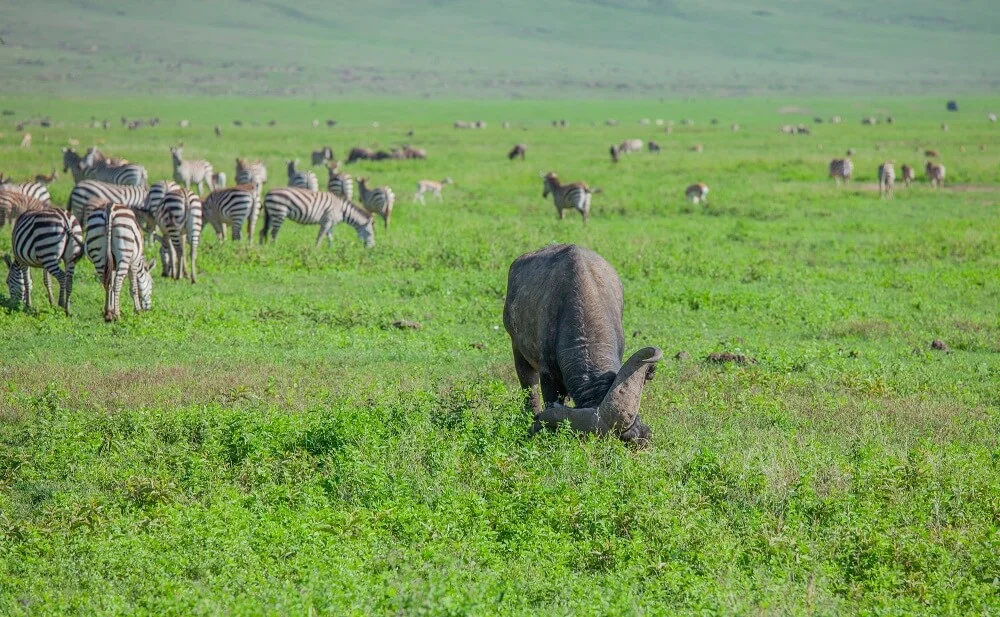
Ngorongoro wildlife is dense and varied. Lions are almost guaranteed on a full day in the crater. Buffalo appear in large herds. Elephants move between the forest and the open plains. Black rhinos still live here, though sightings are never certain.
Hyenas are common and often bold. Jackals, warthogs, and several antelope species fill the grasslands. Hippos rest in the pools. Birdlife is rich, especially around water.
Because the space is limited, animals cannot simply disappear over a distant horizon. Guides know the patterns and can place you in strong positions. This is why a Ngorongoro safari so often delivers high sighting numbers in a short time.
Guides communicate by radio. When a rare sighting occurs, other vehicles can move toward it in an orderly way. This system works best when everyone follows the rules and keeps noise low.
Patience still matters. The best moments often come when you stay with a scene rather than rushing to the next one. A good guide knows when to wait.
For broader context on the country’s parks and wildlife, see our about Tanzania resource.
Scenery and the Crater Floor
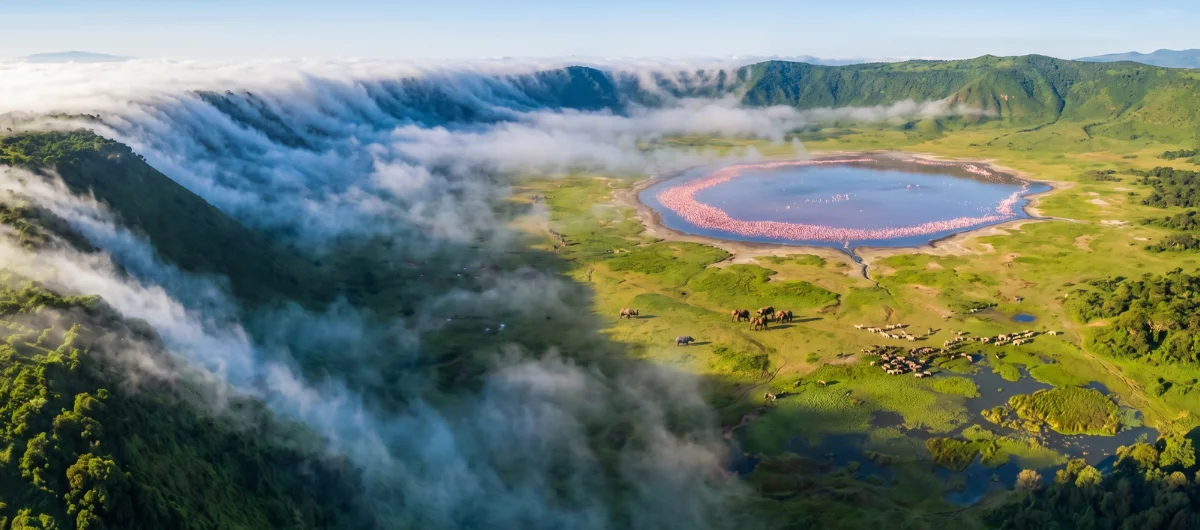
The Ngorongoro Crater floor sits about 600 metres below the rim. Steep walls rise on all sides. The view from the top at sunrise or sunset is one of the classic safari sights in Africa.
On the floor you find grassland, swamp, forest patches, and a soda lake. Each habitat supports different species. Flamingos often gather at the lake. Hippos use the permanent pools. Lions and hyenas patrol the open areas.
The enclosed shape creates a natural bowl. Vehicles follow set tracks and time limits. These rules protect the grass and the animals. They also keep the experience orderly for everyone.
Mornings on the rim can be cold and misty. The descent brings warmer air. Pack layers so you stay comfortable through the day.
The crater floor can feel warm by midday even when the rim was cold at dawn. A light shirt under a warmer layer lets you adjust easily. Sunscreen and a hat remain essential because the equatorial sun is strong.
Best Time for a Ngorongoro Safari
Ngorongoro wildlife remains strong all year. The crater’s permanent water and enclosed shape keep animals visible in every season. Therefore you can plan a visit for almost any month.
The dry months from June to October bring short grass and clear views. Animals gather near water. This is also peak season for the wider Northern Circuit.
The green season after the rains turns the floor lush. Newborn animals appear. Birdlife increases. Some travellers prefer the softer light and lower vehicle numbers of these months.
In short, the best time depends more on your wider itinerary than on the crater alone. The Ngorongoro Crater rewards visitors in every season.
If your wider trip focuses on the Great Migration in the Serengeti, the crater still adds value. The density of resident game is different from the open plains. Together the two experiences feel complete.
Shoulder months such as June and November often give a good balance of wildlife, weather, and slightly lower vehicle numbers.
Ngorongoro Crater vs Serengeti
Both places are excellent. They simply offer different experiences. The Serengeti is vast and open. The migration moves across it. You need more days to cover ground.
A Ngorongoro safari is more compact. One full day on the floor often delivers a high number of sightings. The scenery is dramatic in a different way.
Most Northern Circuit trips include both. The crater gives concentrated viewing. The Serengeti gives space and migration drama. Together they form a balanced safari.
You can see how these parks combine in our safari package list.
Sample Ngorongoro Safari Itineraries
One full day on the crater floor is the standard. Many visitors stay one or two nights on the rim so they can enter early and leave late.
A simple two-night plan might look like this: arrive on the rim in the afternoon, enjoy the view, then spend the full next day on the floor. Depart the following morning toward the Serengeti or back toward Arusha.
Longer Northern Circuit trips often place Ngorongoro after Tarangire or before the Serengeti. The crater works well as a high-density highlight within a wider route.
Packages that already combine the crater with Tarangire and Manyara are listed on our Ngorongoro, Tarangire and Manyara page.
Practical Tips for Your Ngorongoro Safari
- Start early to maximise time on the floor and softer light.
- Bring warm layers for the rim, especially in the dry season.
- Carry binoculars and a camera with zoom for distant animals.
- Follow guide instructions on the floor. Roads and time limits protect the site.
- Combine the crater with the Serengeti or Tarangire for a fuller Northern Circuit experience.
These simple steps help you get the most from the dense Ngorongoro wildlife and the dramatic setting.
Book rim accommodation early in peak months. The best-located lodges and camps fill quickly. A stay on the rim also means you avoid long transfers on the morning of your crater day.
How to Add Ngorongoro to Your Safari
Most Tanzania safari itineraries can include the crater with little difficulty. It sits between the Serengeti and the lower parks, so the logistics are natural.
Tell us your dates, group size, and preferred style. We will show clear options that place Ngorongoro at the right point in the journey. Wider Tanzania choices appear on our Tanzania safari page.
For background on the country and its parks, the about Tanzania resource is a useful starting point.

Ngorongoro Safari FAQs
How long should I spend on a Ngorongoro safari?
One full day on the floor is standard. Many visitors stay one or two nights on the rim for early entry and late exit.
Can I see the Big Five in the Ngorongoro Crater?
Yes. The crater offers some of the best Big Five odds in Tanzania. Lions, elephants, buffalo, and often rhino or leopard appear on a good day.
Is the Ngorongoro Crater open all year?
Yes. Ngorongoro wildlife stays strong in every season. Dry months give clearer views. Green months bring lush scenery and newborns.
Do I need a special permit?
Entry is managed through conservation fees and vehicle rules. Your operator handles the paperwork as part of the safari arrangement.
Can I stay overnight on the crater floor?
No. Overnight stays are on the rim or outside the crater. Day visits only are allowed on the floor.
Add Ngorongoro to Your Safari
Ready for dense Ngorongoro wildlife and one of Africa’s great views? Tell us your dates and we will show clear ways to include the crater in your Tanzania itinerary.