How Much Does Kilimanjaro Trek Cost? Complete Pricing Breakdown 2026 | Africa Paradise Adventures
A transparent, no-surprises look at what climbing Kilimanjaro actually costs in 2026 — from rock-bottom budget outfitters to five-star luxury camps — plus the hidden fees, tipping math, and inclusions that determine whether a quote is a good deal or a red flag.
Typical honest range: $1,800–$2,200 (7-day route) · Full market range: $1,500–$6,000+ · Cheapest ≠ best value on this mountain
What Determines the Cost of Climbing Kilimanjaro?
Kilimanjaro quotes range from under $1,200 to well over $6,000 for the same mountain, and that spread confuses almost every first-time climber. The truth is that price on Kilimanjaro tracks almost perfectly with safety margin, crew welfare, and comfort — not with how far you’ll actually walk.
Six variables drive the final number on any quote: route length and choice, group size (shared vs. private), the number and quality of crew per climber, park fees (which are fixed by Tanzania’s government and identical for every operator), accommodation style before and after the climb, and the operator’s overhead — including whether porters are paid and equipped fairly.
Understanding these variables is the difference between comparing quotes intelligently and simply picking the lowest number on a spreadsheet. Before you book anything, see our full Mount Kilimanjaro overview for route maps, altitude profiles, and season-by-season conditions that also affect what you should expect to pay.
One variable climbers often overlook: your own fitness level. Better-prepared climbers need fewer rest breaks, recover faster at altitude, and are less likely to require the extra guide attention or emergency descent that drives up costs mid-climb. Our mountain coach training resource can help you arrive fit enough to get full value from whichever tier you book.
Kilimanjaro Cost Breakdown 2026: Budget to Luxury
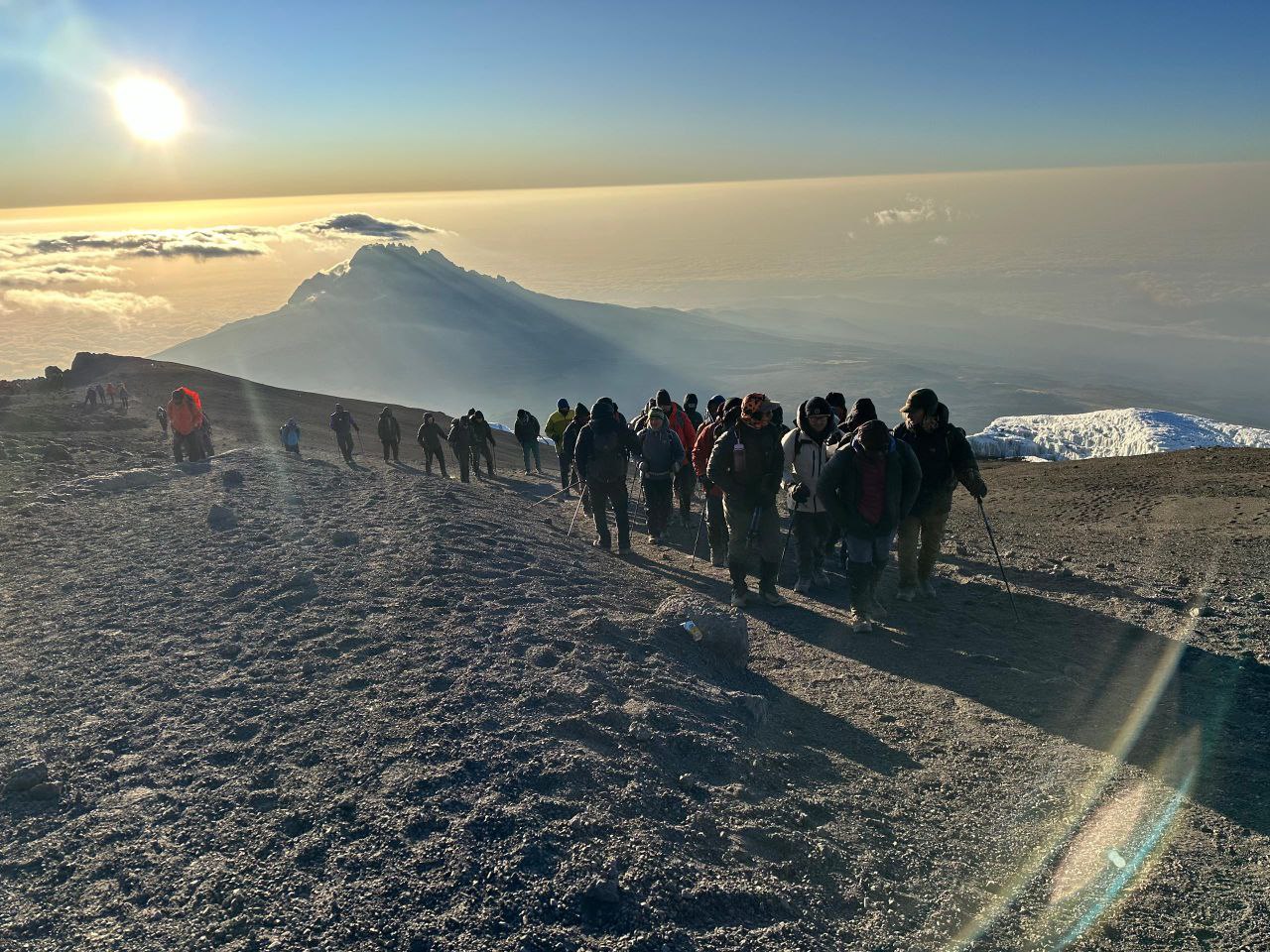
Here’s a realistic breakdown of what you’ll pay at each tier for a 7-day climb, the most commonly recommended duration for acclimatization and summit success.
| Tier | 7-Day Price | Crew Ratio | Camp Style | What You’re Really Paying For |
|---|---|---|---|---|
| Rock-Bottom Budget | $1,200–$1,700 | Thin, often understaffed | Basic shared tents, minimal food | Cut corners on porter pay, gear, and safety backup — highest risk tier |
| Honest Value | $1,800–$2,200 | Full, fairly paid crew | Quality shared tents, solid meals, oxygen/first-aid kits | Everything you actually need for a safe, well-supported summit push |
| Mid-Range | $2,300–$3,200 | Generous crew, senior guides | Upgraded tents, better food, private toilet tent option | Extra comfort layers and smaller group sizes |
| Luxury | $3,500–$6,000+ | High-touch, dedicated staff | Sleeping cots, heated dining tents, gourmet meals, private climbs | Five-star camp comfort layered onto the same mountain and route |
Where we sit: Africa Paradise Adventures prices most 7-day routes in the $1,800–$2,200 “honest value” band. That’s the price point where a crew can be paid fairly, equipped properly, and sized to keep you safe — without you paying for marble sinks you won’t use at 15,000 feet.
What’s Typically Included in a Kilimanjaro Package
A quote is only meaningful once you know exactly what it covers. Reputable operators, including ours, build the following into every published price:
- Park entrance and camping fees — set by Kilimanjaro National Park and identical across operators, roughly $70–$100 per person per day.
- Professional guides — a certified lead guide plus assistant guides (typically one per 2–4 climbers on quality operations).
- Full porter and cook team — carrying gear, food, and camp equipment, and preparing three meals a day on the mountain.
- Camping equipment — sleeping tents, dining tent, and toilet tent (quality varies significantly by tier).
- All meals on the mountain — from breakfast on day one through descent, plus purified drinking water.
- Rescue and first-aid equipment — pulse oximeters, first-aid kits, and emergency evacuation coordination.
- Pre- and post-climb transport — airport-to-hotel transfers and transport to the gate.
For a day-by-day look at what actually happens on the mountain once you’re climbing, our on-the-trek FAQ covers daily routines, meals, toilet facilities, and what a typical summit night looks like.
Hidden Fees and Costs to Watch For
Most Kilimanjaro sticker shock doesn’t come from the base quote — it comes from what’s quietly excluded. Before you book, confirm whether each of these is included or extra:

- Tanzania visa ($50–$100, purchased separately from your climb).
- International and domestic flights to Kilimanjaro International Airport (JRO), not included in any climb price.
- Pre- and post-climb hotel nights — some budget quotes only include the nights strictly required, not buffer days for delays.
- Travel and evacuation insurance — non-negotiable on Kilimanjaro; budget $100–$300 and confirm it covers high-altitude evacuation specifically.
- Sleeping bag and gear rental — often billed as an add-on if you don’t own cold-weather gear (see our gear section below).
- Tips for guides, cooks, and porters — almost never included in the quoted price, and often the single largest “surprise” cost climbers underestimate.
- Summit certificate and bottled celebratory extras — minor, but some operators charge for these.
Rule of thumb: if a quote looks 30–40% cheaper than the $1,800–$2,200 honest-value range, ask specifically what’s excluded before you assume it’s a bargain.
How Route Selection Affects Kilimanjaro Price
Every extra day on the mountain adds guide fees, porter wages, park camping fees, and food — but it also meaningfully raises your summit success rate through better acclimatization. Route choice is where climbers can control cost the most without cutting safety corners.
Route Length vs. Typical Price (Honest-Value Tier)
- Marangu (5–6 days): $1,500–$1,900. The only route with hut accommodation instead of tents; lower summit success rate due to shorter acclimatization.
- Machame (6–7 days): $1,800–$2,300. The most popular route, balancing scenery, acclimatization, and cost.
- Lemosho (7–8 days): $2,000–$2,600. Longer approach, higher success rates, less crowded lower camps.
- Northern Circuit (8–9 days): $2,400–$3,200. The longest route and highest published summit success rate; premium price reflects extra days of full crew support.
Adding a single acclimatization day to a 6-day itinerary typically costs $150–$250 more but can raise summit success meaningfully — often the best money you’ll spend on the whole trip. Our tips for climbers guide breaks down which route fits different fitness levels and timelines.
How Long Does It Take to Climb Kilimanjaro? Route Durations Explained
Climbing Mount Kilimanjaro is not a one-day challenge. Depending on the route and itinerary, most climbs take roughly five to nine days on the mountain.
The route you choose affects not only the scenery and style of the trek, but also how much time your body has to adjust to increasing altitude. A longer itinerary does not guarantee that a climber will reach Uhuru Peak, but gradual ascent and sensible acclimatisation are important considerations.
Typical Route Durations
- Marangu: approximately 5–6 days
- Machame: approximately 6–7 days
- Lemosho: approximately 7–8 days
- Rongai: approximately 6–7 days
- Shira: approximately 6–7 days
- Umbwe: approximately 5–6 days
- Northern Circuit: approximately 8–9 days, depending on itinerary
Which Route Is Best?
There is no single answer for every climber. Fitness, trekking experience, available time, preferred accommodation style, scenery and acclimatisation profile should all be considered.
For many first-time high-altitude trekkers, choosing enough days on the mountain is more important than choosing the shortest itinerary. Kilimanjaro should never be treated as a race.
Planning Your Climb
Prepare physically, discuss health concerns with an appropriate medical professional, bring suitable mountain clothing and equipment, and climb with a licensed operator and qualified mountain team.
Speak with our Kilimanjaro team to compare routes and choose an itinerary suited to your available time and trekking experience. Get in touch with our route specialists →
Group Climbs vs. Private Climbs: Cost Comparison
Joining a scheduled group departure is the single biggest lever for lowering cost, because park fees, guide fees, and cook staff are split across more climbers.
- Group (shared) departure: Typically $200–$500 cheaper per person than a private climb on the same route, since fixed costs are divided across the group.
- Private climb: You set your own pace, start date, and rest days, but you absorb the full fixed cost — expect a premium of roughly 15–25% over a comparable group rate.
- Small private groups (2–4 people): A middle ground — you keep flexibility while splitting costs with friends or family, often landing close to standard group pricing.
If budget is the priority, ask your operator for upcoming fixed group departure dates before requesting a custom private itinerary — the savings are usually substantial for the same route and season.
Tipping Costs: Budgeting for Your Mountain Crew
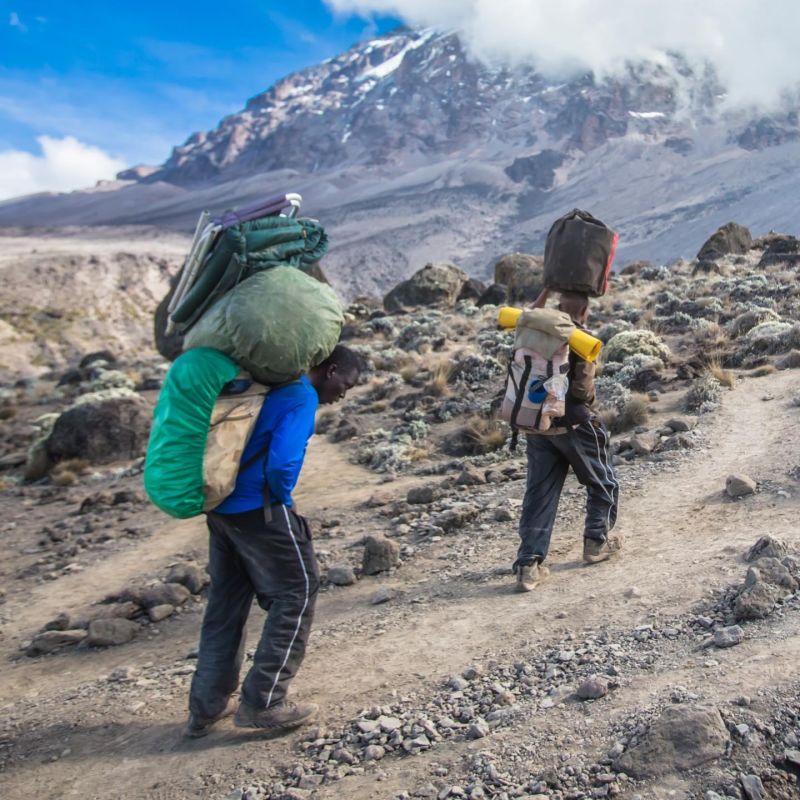
Tipping is the most consistently underestimated line item in a Kilimanjaro budget — and it isn’t optional in practice. A typical 7-day climb involves a lead guide, assistant guides, a cook, and a dozen or more porters, all of whom rely on tips as a core part of their income.
| Crew Role | Typical Daily Tip (Group Total) | 7-Day Trip Estimate |
|---|---|---|
| Lead Guide | $20–$25/day | $140–$175 |
| Assistant Guide | $15–$20/day | $105–$140 |
| Cook | $12–$15/day | $84–$105 |
| Porter (each) | $8–$10/day | $56–$70 per porter |
For a typical 7-day climb, budget roughly $250–$350 per climber in total tips, paid in cash on the final morning. For the full etiquette, currency, and distribution breakdown, see our dedicated tipping policy guide.
Gear and Equipment Costs
Kilimanjaro takes you through five climate zones, from rainforest to arctic summit conditions, so gear isn’t optional — it’s a genuine safety requirement. Costs vary widely depending on what you already own.
- Buying gear new: $600–$1,200 for a full cold-weather kit (down jacket, base layers, summit gloves, gaiters, trekking poles, headlamp).
- Renting key items locally: $80–$200 for a sleeping bag, down jacket, and trekking poles — a smart option if this is a one-time climb.
- Mixing owned and rented gear: Most climbers already own hiking boots and layers; renting only the extreme-cold items (summit-rated sleeping bag, down parka) is the most cost-efficient approach.
Skimping on gear to save $100–$200 is one of the most common regrets climbers report on summit night, when temperatures can drop below -15°C (5°F). Our tips for climbers resource includes a full packing list broken down by climate zone.
When to Book for the Best Kilimanjaro Price
- Book 4–6 months ahead for the best availability and rate on peak season dates (January–March, June–October).
- Shoulder season climbs (April–May, November) often come with modest discounts and thinner crowds, though rain is more likely.
- Last-minute group joins can occasionally undercut standard pricing if an operator is filling a departure, but this is unreliable and shouldn’t be the basis of your trip planning.
- Avoid last-minute solo private bookings — they consistently carry the highest per-person cost on the mountain.
Our Pricing Philosophy: Why Transparency Matters
Kilimanjaro pricing has an uncomfortable truth: the cheapest operators on the mountain are frequently the ones underpaying and underequipping their porters — the people whose labor makes your summit possible. We price our climbs in the $1,800–$2,200 honest-value range deliberately, because that’s the number that lets us pay a full, fairly compensated crew, carry proper safety equipment, and keep group sizes small enough for real guide attention.
We’d rather show you exactly where every dollar goes than win your booking with a number that only works by cutting corners on the mountain. If you’re comparing quotes, ask any operator directly what their porters are paid and how many climbers each guide is responsible for — the answers tell you more about your safety margin than the total on the invoice.
Frequently Asked Questions: Kilimanjaro Cost 2026
How much does it cost to climb Kilimanjaro in 2026?
Realistic 7-day pricing ranges from about $1,500 at the low end to $6,000+ for luxury climbs. Most well-supported, safely staffed operations price between $1,800 and $2,200 per person, which reflects fair crew pay, proper equipment, and adequate guide ratios.
Why do Kilimanjaro prices vary so much between operators?
Route length, crew size, camp equipment quality, and group size (private vs. shared) all affect price. The biggest hidden factor is porter pay and staffing ratio — operators who underpay porters can advertise significantly lower prices while cutting corners on safety.
Is a cheap Kilimanjaro package a red flag?
Often, yes. Prices below roughly $1,500 for a 7-day climb usually mean an understaffed crew, minimal safety equipment, or porters being paid and equipped inadequately. Ask directly what’s included and how the crew is compensated before booking.
What’s not included in the price of a Kilimanjaro climb?
International flights, Tanzania visa fees, travel insurance, tips for your crew, and any gear rental are almost always billed separately from the base climb price. Budget an additional $500–$900 beyond the quoted climb cost to cover these.
How much should I budget for tips on Kilimanjaro?
Plan for roughly $250–$350 per climber across the full crew — lead guide, assistant guides, cook, and porters — for a standard 7-day climb. See our full tipping policy for a role-by-role breakdown.
Does a longer route always cost more?
Yes, each additional day adds park fees, food, and crew wages. However, longer routes (7–9 days) also significantly improve acclimatization and summit success rates, so the extra cost often delivers better value per successful summit, not just per dollar spent.
Is it cheaper to climb Kilimanjaro in a group?
Yes. Joining a scheduled group departure typically costs $200–$500 less per person than a private climb on the same route, because fixed costs like guide fees and park permits are split across more climbers.
Do I need to buy all my own climbing gear?
No. Most climbers rent extreme cold-weather items like summit-rated sleeping bags and down parkas locally for $80–$200, while using hiking boots and layers they already own. Full details are in our tips for climbers guide.
What questions should I ask before booking a Kilimanjaro package?
Ask exactly what’s included (meals, equipment, transport), the guide-to-climber ratio, how porters are paid and equipped, cancellation and weather-delay policies, and what happens in a medical emergency. Our full Kilimanjaro FAQ covers these in detail.
Can I get a personalized price quote?
Yes. Pricing depends on your dates, route, group size, and comfort tier, so the most accurate number comes from a direct quote rather than a generic price list. Reach out for a transparent, itemized quote with nothing hidden.
Get a Transparent Quote for Your Kilimanjaro Climb
You’ve seen the real range — now get a number built specifically for your route, dates, and group size, with every inclusion and exclusion spelled out in plain language. No inflated luxury upsells, no mystery discounts that mean an underpaid crew. Just an honest price for a safely run, well-supported climb.