
Best Time to Visit Tanzania Safari: Month-by-Month Guide
The definitive month-by-month planner for Tanzania safari in 2026. Weather, wildlife, Great Migration location, crowds, and costs so you can choose the right dates for Serengeti, Ngorongoro, and Tarangire.
Peak windows: Jul–Sep & Jan–Feb · Migration is year-round · Every month has a reason to go
Quick Overview: Is There a Single “Best” Time?
There is no single best month for a Tanzania safari. Instead, the right dates depend on what you want most: river crossings, calving and predator action, fewer crowds, lower prices, or reliable dry-season game viewing.
Furthermore, two windows stand out for most travellers. July through September delivers classic dry-season conditions and the famous Mara River crossings in the northern Serengeti. Meanwhile, January and February bring the calving season on the southern plains—hundreds of thousands of wildebeest calves and intense predator activity—with generally lower crowds than the mid-year peak.
In addition, Tanzania remains a year-round destination. Although the long rains of April–May reduce vehicle access and some camps close, green-season rates and empty parks reward flexible travellers. Likewise, the short rains of November–December offer a quieter alternative with improving wildlife concentrations as the herds move south. For a broader introduction to the country, explore our about Tanzania resource.
The Three Seasons at a Glance
Understanding Tanzania’s seasons is therefore the fastest way to narrow your dates.
Peak Dry Season (June–October)
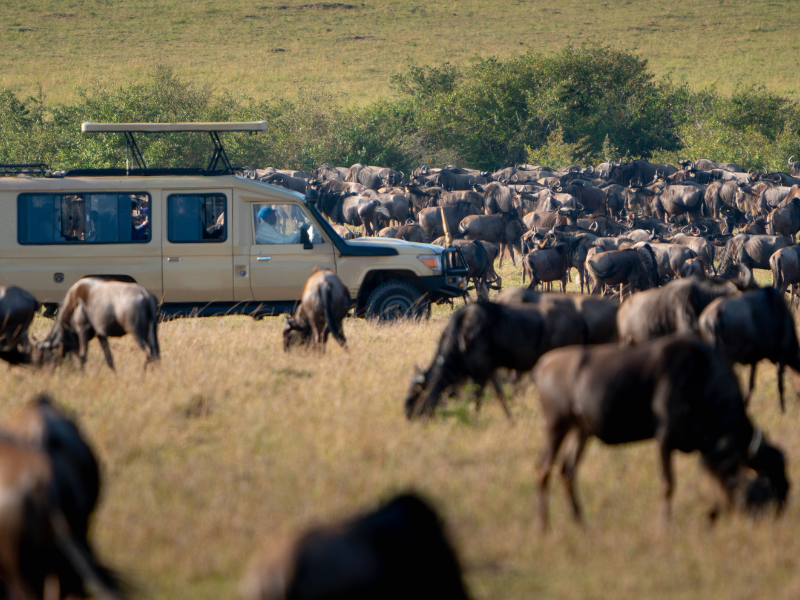
During this period you will find minimal rain, short grass, and wildlife concentrated around permanent water. As a result, this is the classic safari window. Moreover, Mara River crossings peak July–September in the northern Serengeti. At the same time, Tarangire’s elephant herds are at their densest. Consequently, crowds and prices are highest, especially in August. Therefore, book 6–12 months ahead for the best northern Serengeti camps.
Calving / Short Dry Window (January–February)
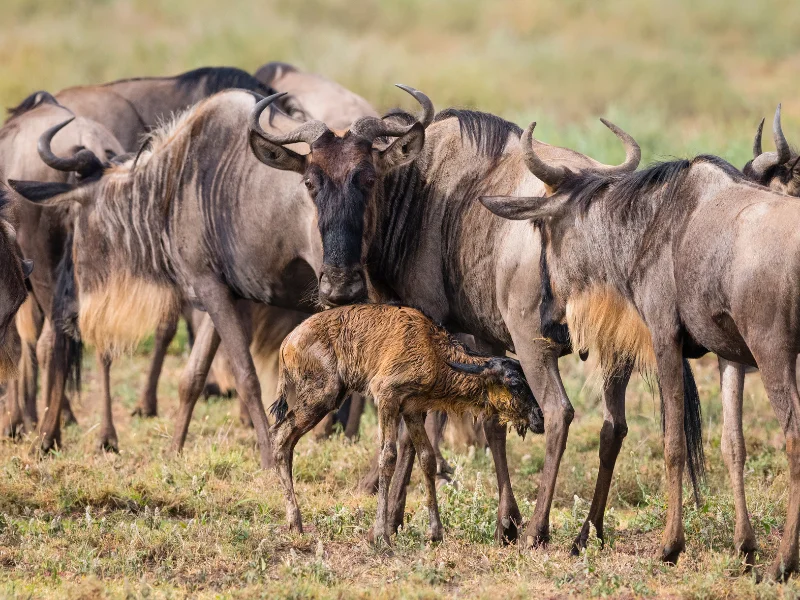
After the short rains, the southern Serengeti and Ndutu plains turn green. In fact, up to 8,000 wildebeest calves are born daily at the peak. Meanwhile, lions, cheetahs, and hyenas hunt in exceptional density. Overall, weather is generally warm and pleasant with occasional showers. In addition, crowds are moderate and rates sit below the July–August peak.
Green / Long Rains Season (March–May)
Heavier rains arrive, especially in April–May. As a result, some roads become difficult and a number of camps close. Nevertheless, landscapes are lush, birdlife is outstanding, and prices drop 30–50% in many places. Consequently, this window is ideal for photographers and travellers who prioritise solitude over guaranteed river-crossing drama.
Month-by-Month Tanzania Safari Guide 2026
January
Weather: Warm days (25–30°C), cooler nights, low rainfall after the short rains.
Wildlife: Calving begins on the southern Serengeti / Ndutu plains. In addition, predator action intensifies as newborns appear.
Crowds & price: Moderate. Therefore, this month offers good value compared with mid-year peak.
Best for: Early calving, photography, combining with Ngorongoro.
February
Weather: Similar to January; generally dry and comfortable.
Wildlife: Peak calving—up to 8,000 calves born daily. As a result, this is one of the most intense predator–prey spectacles of the year.
Crowds & price: Low to moderate. Consequently, February delivers excellent overall value.
Best for: Calving season, big-cat action, fewer vehicles than dry season.
March
Weather: Rainfall begins to rise; still workable early in the month.
Wildlife: Herds start moving northwest. Meanwhile, resident game remains strong and green landscapes return.
Crowds & price: Low. Therefore, rates remain attractive.
Best for: Value seekers and those who prefer quieter parks.
April
Weather: Long rains at their heaviest. Afternoon storms are common; consequently, some roads become difficult.
Wildlife: Dispersed herds, excellent birding, lush scenery. In addition, many mobile camps close.
Crowds & price: Very low. As a result, this is the lowest-rate period of the year.
Best for: Budget travellers, birders, and landscape photography.
May
Weather: Rains ease toward the end of the month. Meanwhile, conditions improve rapidly.
Wildlife: Herds push toward the Western Corridor; furthermore, early Grumeti activity is possible late May.
Crowds & price: Very low to low. Therefore, strong value continues.
Best for: Late green-season deals and quieter game viewing.
June
Weather: Dry season opens. Clear skies, cool mornings, and excellent road conditions follow.
Wildlife: Grumeti River crossings begin in the Western Corridor. In addition, animals concentrate at water while Tarangire elephants start building.
Crowds & price: Moderate and rising. Nevertheless, rates still sit below July–August peaks.
Best for: Early dry-season quality without peak crowds and prices.
July
Weather: Fully dry. Cool mornings (sometimes 10–15°C), warm days, and zero significant rain.
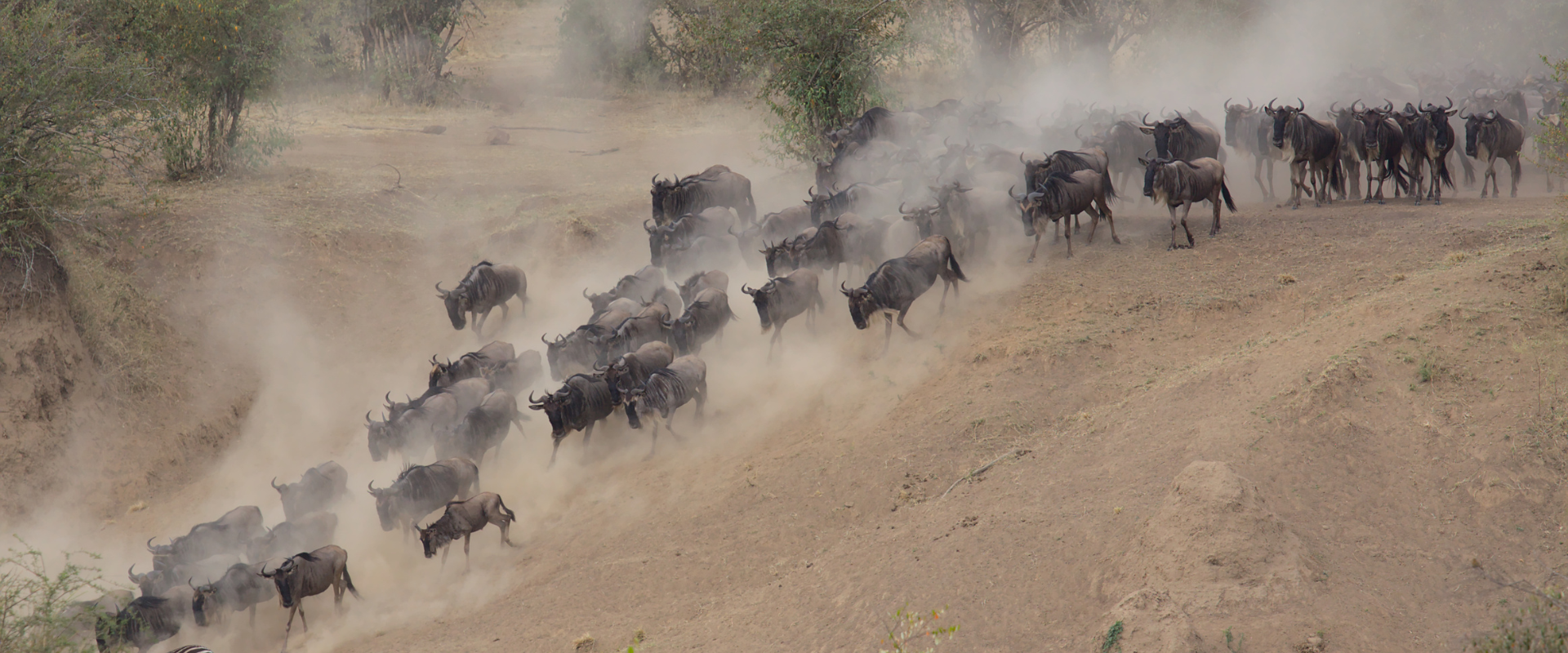
Wildlife: Mara River crossings begin in the northern Serengeti. Moreover, general game viewing remains excellent across the Northern Circuit.
Crowds & price: High. Consequently, peak season pricing starts in earnest.
Best for: First river crossings of the season with slightly fewer vehicles than August.
August
Weather: Peak dry conditions. Clear, sunny, and reliable weather prevails.
Wildlife: Highest frequency of Mara River crossings. At the same time, classic dry-season concentrations appear everywhere.
Crowds & price: Very high. Therefore, this is the highest-rate period of the year; book early.
Best for: Maximum crossing drama and the most reliable dry-season wildlife.
September
Weather: Still dry and warm. In addition, visibility remains excellent.
Wildlife: Crossings continue in the northern Serengeti. Furthermore, many guides consider this the finest single month overall—sustained action with fewer vehicles than August.
Crowds & price: High but lower than August. Consequently, slightly better value appears.
Best for: Balanced peak experience: crossings + lower density + outstanding conditions.
October
Weather: Warming; first short rains are possible late in the month.
Wildlife: Herds begin returning south. Meanwhile, last crossings remain possible and Tarangire elephants stay superb.
Crowds & price: Moderate to high, easing. Therefore, good shoulder pricing appears in some camps.
Best for: Late dry-season value and the southward migration phase.
November
Weather: Short rains arrive. As a result, landscapes green up while some afternoon showers occur.
Wildlife: Herds move through central Serengeti toward the south. In addition, resident game stays strong and birdlife increases.
Crowds & price: Low. Consequently, attractive rates return.
Best for: Quieter parks, green scenery, and value.
December
Weather: Short rains taper; meanwhile, conditions improve through the month.
Wildlife: Herds reach the southern plains. Furthermore, calving season approaches while festive-period demand rises late month.
Crowds & price: Moderate to high over holidays; otherwise good value.
Best for: Families over the holidays and early calving preparation.
Great Migration Calendar: Where the Herds Are
The Great Migration is a continuous cycle, not a single event. Specifically, roughly 1.5 million wildebeest, hundreds of thousands of zebra, and large numbers of gazelle move through the Serengeti–Mara ecosystem in search of fresh grass.
| Months | Location | Key Event |
|---|---|---|
| Jan–Mar | Southern Serengeti / Ndutu | Calving season; peak predator action |
| Apr–May | Central → Western Corridor | Herds moving northwest; green landscapes |
| Jun–Jul | Western Corridor → North | Grumeti crossings; approach to Mara River |
| Jul–Oct | Northern Serengeti / Mara | Mara River crossings (peak Aug–Sep) |
| Oct–Dec | Northern → Southern plains | Return south; herds rebuild for calving |
Nevertheless, exact timing shifts with rainfall. Therefore, a flexible itinerary and an operator with real-time local knowledge remain the best insurance.
Best Months by Travel Goal
- Mara River crossings: July–September (peak frequency in August; however, September is often preferred for fewer vehicles).
- Calving & predator action: January–February in southern Serengeti / Ndutu.
- Big Five reliability & dry-season viewing: June–October across the Northern Circuit.
- Lowest prices & fewest people: April–May (nevertheless, accept rain and possible road limitations).
- Best overall balance: September (crossings still possible, dry conditions, lower density than August) or February (calving peak with manageable crowds).
- Photography (light + action): February (calving) and June–September (dry light and river drama).
- Families / school holidays: July–August or mid-December–early January (therefore, book far ahead).
Best Time by Park
Serengeti National Park
The park remains excellent year-round for resident game. Consequently, position yourself according to the migration: south (Ndutu) Jan–Mar, west Jun–Jul, north Jul–Oct. Meanwhile, Central Seronera stays strong most of the year. For full safari options, see our Tanzania safari page.
Ngorongoro Crater
Outstanding in every month. In fact, the enclosed crater holds high densities of lion, elephant, buffalo, and black rhino regardless of season. Therefore, combine with Serengeti for the classic Northern Circuit.
Tarangire National Park
Dry season (June–October) is peak for massive elephant concentrations along the Tarangire River. In contrast, green season is quieter and still rewarding for birdlife and landscapes.
Lake Manyara
Good year-round for tree-climbing lions, elephants, and birds. As a result, it is often added as a shorter stop on a Northern Circuit itinerary.
How Season Affects Price and Crowds
Peak dry season (especially July–August) commands the highest rates and the densest vehicle numbers at famous crossing points. However, shoulder months—June, September, October, and the January–February calving window—often deliver near-peak wildlife quality at more comfortable densities and somewhat lower prices.
In addition, long-rains months (April–May) offer the deepest discounts. Although some camps close, those that remain open can be excellent value for travellers who accept variable weather.
Therefore, book peak northern Serengeti dates 9–12 months ahead. Meanwhile, shoulder and green-season travel can often be arranged with shorter lead times. Browse current options on our safari package list.
How to Choose Your Dates
- First, decide your priority: crossings, calving, Big Five density, budget, or solitude.
- Next, match location to the migration phase (south for calving, north for crossings).
- In addition, allow at least 5–7 days on a Northern Circuit itinerary for realistic odds of strong sightings.
- Furthermore, build in a buffer day if river crossings are essential—herds move on their own schedule.
- Finally, work with an operator who can adjust camp locations as the herds shift.
Africa Paradise Adventures designs itineraries around the exact window you choose, balancing wildlife probability, camp quality, and budget. For personalised advice, contact us.
Frequently Asked Questions
What is the single best month for a Tanzania safari?
Many experienced guides favour September: dry-season conditions, ongoing Mara River crossings, and noticeably fewer vehicles than August. Alternatively, February is the strongest choice if you prioritise calving and predator action.
When are the Mara River crossings?
Typically July through October in the northern Serengeti, with the highest frequency often in August. Nevertheless, exact timing depends on rainfall and herd movement.
Is the green season worth visiting?
Yes, if you value lower prices, fewer people, lush landscapes, and excellent birding. However, accept that some roads may be difficult and a few camps close in April–May.
Can I see the Big Five year-round?
Ngorongoro Crater offers high Big Five density in every month. Meanwhile, Serengeti and Tarangire are strongest in the dry season when animals concentrate at water, yet resident populations remain visible year-round.
How far ahead should I book?
6–12 months for July–September and festive December–January. In contrast, 3–6 months is often sufficient for shoulder and green-season travel.
Does the migration happen every year on the same dates?
The broad pattern is consistent. However, rainfall shifts the exact timing of calving and river crossings by weeks in some years. Therefore, flexible itineraries and local knowledge matter.
Ready to Choose Your Dates? Get a Tailored Quote
Tell us your preferred window, group size, and priorities—river crossings, calving, Big Five focus, or best value—and we will design a Northern Circuit itinerary that matches. Expert guides, strategic camp placement, and transparent pricing await.